
Central Vacuum in Utah
Central vacuum systems have several advantages over standard vacuum cleaners. First, central systems use much more powerful suction. Second, dust and allergens are exhausted outside instead of right back into the home. Lastly, you don't have to lug that heavy upright around the house anymore.
INSTALLING HOME CENTRAL VACUUM SYSTEMS IN UTAH
Vacuuming is a real pain for multiple-level home owners. To solve the problem, you could purchase a lightweight vacuum or hire a professional cleaner. However, neither of these fixes completely solves the problem. Rather than lug your vacuum around from floor to floor or pay for cleaning on a weekly basis, make the simplest and most affordable decision — install a home central vacuum. This system is comprised of a main power unit and inlets and hoses that are installed around your home. These provide permanent vacuum units on each level and in any room you choose. Once the dirt and debris is vacuumed, it's taken through the internal tubing system to a canister. This canister is simply emptied into the trash when full. See why we've been serving Utah for over 45 years!
Learn MoreDust and Pollen Outside Where It Should Be
Even if an upright vacuum says it traps dirt down to “some micron,” you start to smell the dust, allergens, and pollen you are spreading back into the air after just a few minutes of use. With a central vacuum all of that material is simply exhausted outside — removing it from your living area and the air you breathe. If you or anyone in the household suffers from asthma or allergies, a central vacuum system can provide much-needed relief.
Hide-A-Hose Central Vacuum System
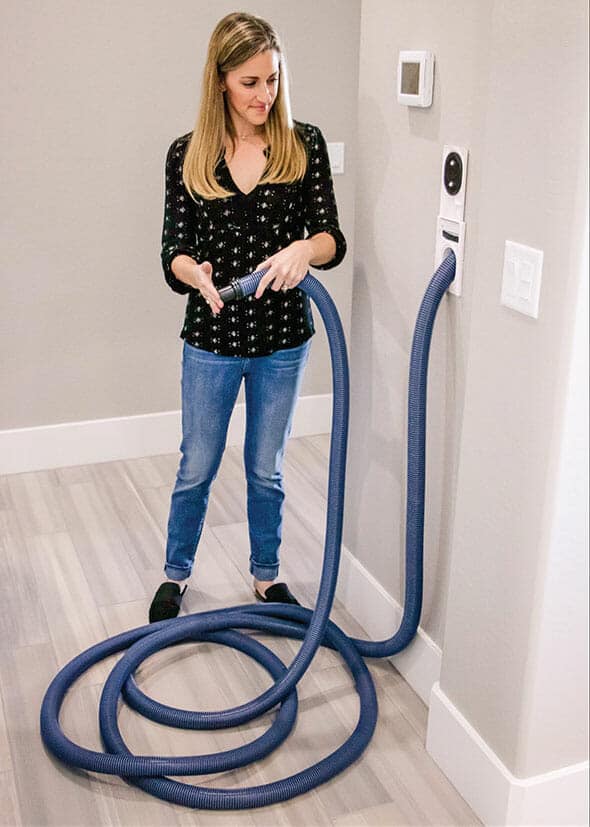
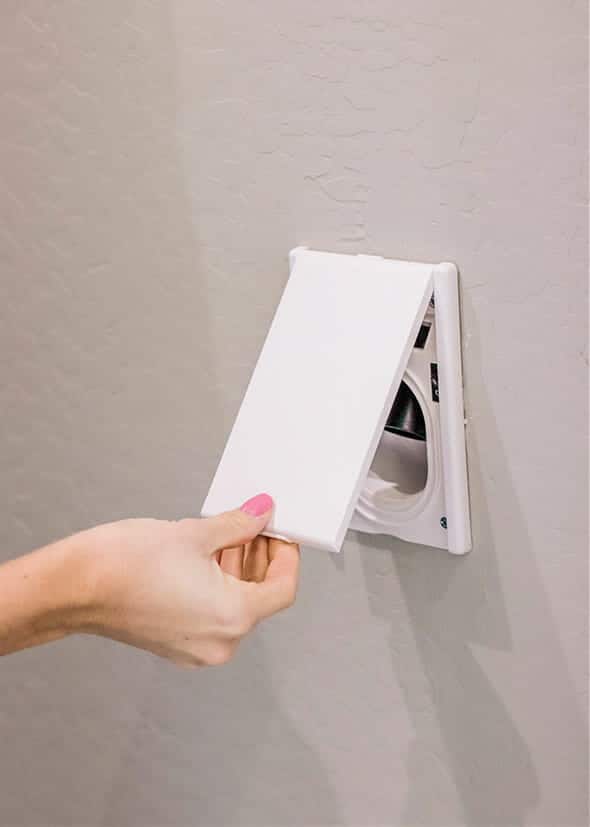
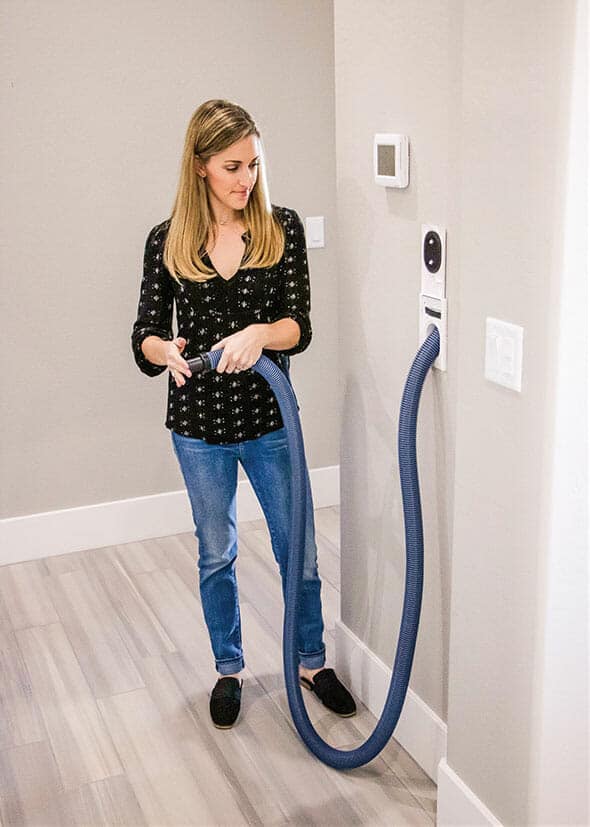
With Hide-A-Hose, you no longer need to carry that long hose around the house. Simply pull the desired amount of hose out of the wall and start vacuuming. When done, release the hose, cover the end with your hand and the hose will “suck” itself back into the wall. These work great for areas with hard floor surfaces such as kitchens, laundry rooms, and mud rooms.
Getting Started With A Central Vacuum
Now that you know why you should install a home central vacuum system, it’s time to get started on the installation process. Visit Reed’s Built-Ins to discuss what system options are right for you and your home.
Available Options Include:
- Size of Machine Needed
- Number of Inlets Needed
- Cyclonic or Filtered
- Hide-A-Hose
- Vacpan
See The Hide-A-Hose In Action
Vacuuming is now easier than ever with Hide-A-Hose. The self contained hose stows away when not in use. Let Reed’s Built-Ins install a central vacuum system in your home.
Reeds Built-Ins Specialists Are Here
You'll also want to discuss your options for hoses, accessory attachments and power brushes when you meet with Reed's Built-Ins. Covering each of these important aspects of your system will help you ensure that it will meet the unique needs of your home.
Central Vacuum System FAQs
How does a central vacuum system work?
A central vacuum system uses a permanently installed power unit connected to tubing that runs through the home. When you attach a hose to one of the wall inlets, dirt and debris travel through that tubing to a collection canister or bag near the main unit.
The setup gives you whole-home cleaning power without hauling an upright vacuum between rooms or up the stairs. Reed’s Built-Ins plans the power unit, inlet locations, hose style, filtration, and accessories around the size and layout of your home.
Are central vacuum systems worth it?
For many homeowners, a central vacuum is worth considering because it makes routine cleaning easier. You carry a lightweight hose and attachments instead of wrestling a full vacuum around furniture, corners, and staircases. The system can also move captured dust away from your main living areas, particularly when the unit is configured to exhaust outside.
The right choice depends on your floor surfaces, home layout, cleaning habits, pets, and storage preferences. We can walk you through cyclonic and filtered systems, Vacpan inlets, power brushes, and retractable hose options without burying you in technical talk.
Can a central vacuum system be installed in an existing Utah home?
In many cases, yes. Central vacuum installation is available for existing homes as well as new construction. During a retrofit, tubing may be routed through an attic, basement, closet, utility area, or accessible wall cavity. The best route depends on the home’s framing, number of floors, and finished spaces.
Some homes are fairly straightforward. Others need a little creative planning. Reed’s Built-Ins will evaluate the property before recommending inlet locations or a tubing route, so you get a realistic plan based on the home in front of us.
How much does central vacuum installation cost in Utah?
The cost of central vacuum installation varies because every home asks something different of the system. Pricing may be affected by the home’s size, number of floors, accessibility, power-unit capacity, number and type of inlets, filtration choice, hose system, and cleaning attachments.
A new construction installation may also involve a different process than retrofitting a finished home. Rather than tossing out a broad number that may have little connection to your project, Reed’s Built-Ins can review your layout and build a quote around the system you actually need.
What is a Hide-A-Hose central vacuum system?
Hide-A-Hose stores the vacuum hose inside the wall tubing when you are finished cleaning. You pull out the amount of hose you need, connect your attachment, and start vacuuming. When the job is done, covering the end of the hose allows the system’s suction to draw it back into the wall.
That means no giant coil of hose hanging in a closet and no wrestling match when you want to clean a quick spill. Hide-A-Hose can be especially handy in kitchens, laundry rooms, mudrooms, and other spaces where crumbs and tracked-in dirt seem to appear five minutes after you sweep.
What maintenance does a central vacuum system need?
Central vacuum maintenance is generally manageable, although the exact routine depends on whether you have a cyclonic, filtered, or bagged system. The collection canister or bag should be emptied or changed before it becomes overfilled. Filters may need cleaning or replacement according to the manufacturer’s instructions. Some filters are washable; others can be damaged by water, so checking the system manual matters.
It is also worth watching for changes in suction, unusual sounds, or a unit that does not switch on and off properly. Reed’s Built-Ins provides professional planning, expert installation, and ongoing support backed by more than 50 years of experience serving Utah. Ready to make vacuuming less of a haul? Let’s talk through your home.